
The Challenge:
The only real means of communication was “walkie-talkies” and there was no way to make a phone call, send an email, or as was often needed – send a photo of a broken-down machine.
The Solution:
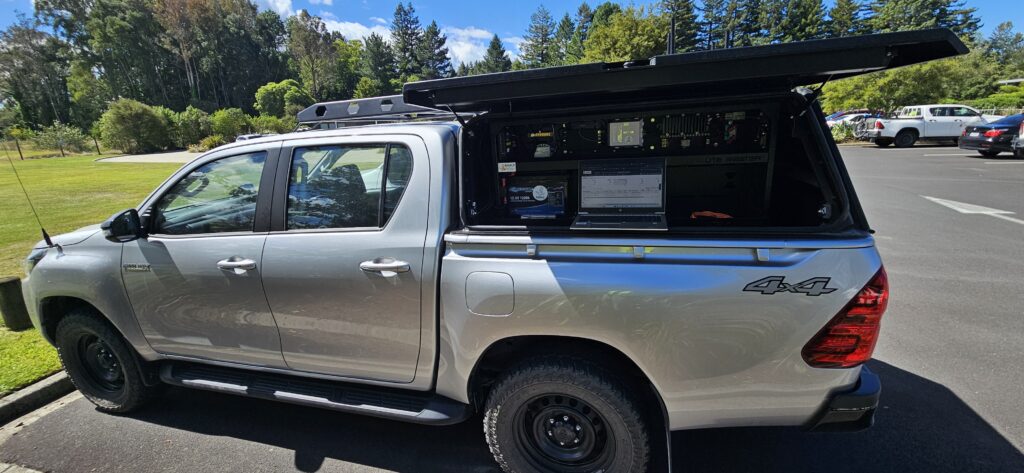
A mobile kit including a range of technology that connects users to both a mobile network and the internet.
The Results:
Contractors can make and receive phone calls without having to drive half an hour or more to find reception, and can send and receive emails, photographs, maps and data.
These days it’s hard to imagine many places in the world where there’s no internet connection, but that was the case in the Kaingaroa Forest in New Zealand’s central North Island.
It meant collecting data from harvesting operations across the 190,000-hectare forest plantation was historically a challenge.
But it wasn’t just data gathering efficiency that forest owner and management company Timberlands wanted to explore. Rotorua-based Timberlands was also looking to the future which could include autonomous, remote-controlled machinery to reduce harvest costs and improve health and safety.
To give an idea of what labour and production cost efficiencies could mean for Timberlands, each year the Kaingaroa Timberlands estate produces up to 4.5 million cubic metres of logs.
Timberlands systems transformation manager Megan Costello, who collaborated at the start of the Digitally Enabled Harvesting project with Eagle Technology, says having an internet connection within the forest would bring benefits at different stages of the log production cycle such as felling, processing and loading.
While autonomous operations may be some way off, having connectivity within the forest allows Timberlands to study the way current machine operators worked, including how much time they spent on different aspects of harvesting and processing, and fuel usage.
“It was basically just looking at ‘can we use data to optimise how we do logging’,” Costello says.
For example, using connectivity Timberlands can gather real-time data on idle time and unnecessary machine movements.
“Enabling the internet onsite and at each machine allows us to approach the problem from a number of different angles.”
Enter Eagle Technology systems engineer Aaron Oxenham.
When the project began the forest was “off the grid”, according to Oxenham and contracting crews were mostly without communication.
“There’s no cell phone coverage out there or very little,” Oxenham says. “There’s no buildings, or power, just this humongous forest – about 2000 square kilometres of pine.”
The only real means of communication were “walkie talkies” he says, and there was no way to make a phone call, send an email, or as was often needed – send a photo of a broken-down machine.
“Normally a mechanic would drive out there, two, three hours to find out what’s wrong and go ‘oh I don’t have that piece, I’ll come back tomorrow’ and meanwhile they’re losing thousands of dollars an hour in production.”
But with the internet, a photo can be emailed, or a video call can be made to the mechanic who can turn up ready to make the repair.
The project began in 2022 after Timberlands approached Eagle Technology with the problem, and Oxenham began trialling ways to get internet into the remote location.
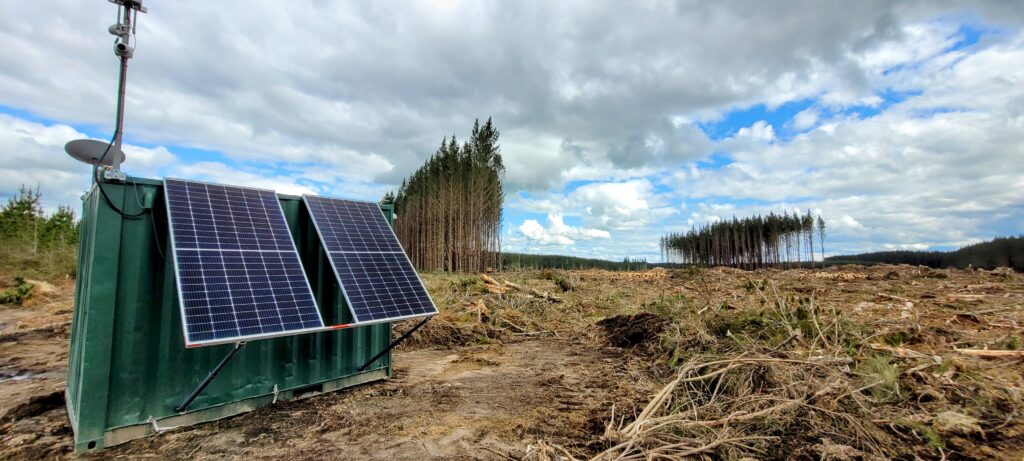
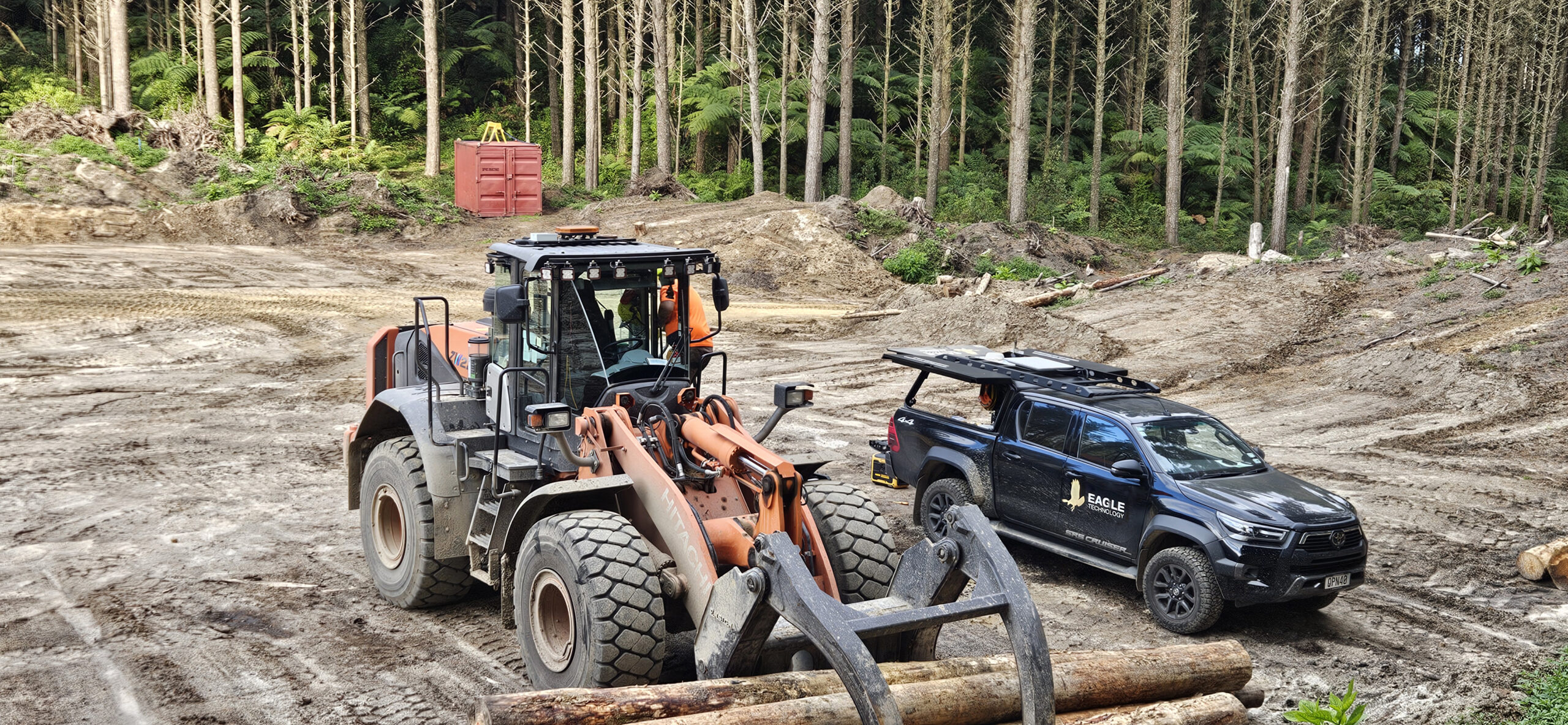
With security top of mind, Eagle set up a shipping container with Starlink, solar panels, batteries and Wi-Fi in the middle of a harvesting site.
It ran successfully for 2 ½ years but had a limited range and was affected by sunlight and shading depending on the position of the container, which was expensive to move regularly.
While Oxenham was doing some research, Cyclone Gabrielle hit New Zealand and Eagle Technology offered to help get internet into cut-off communities in the Gisborne region.
As part of that assistance Oxenham loaded up a utility vehicle with Starlink and Wi-Fi and the idea was born.
However, the unit was big and heavy, so Oxenham set about refining the solution.
He built a prototype using a ute with Starlink on the roof and a power system in the tray.
Eagle partnered with Australian company Hypha, which had helped the New South Wales Rural Fire Service to connect 5000 fire appliances to the internet, to develop the solution.
“It made the build much quicker. It turned up on the courier and it bolted into the back of the ute.”
The harvesting contractors provided seven utes, Timberlands provided the canopy for each ute, and Eagle bolted on the kits in January 2025.